



Introduction
The inevitable has finally come to pass: Graham Platner, the controversial Democratic nominee for Maine’s U.S. Senate race, has faced a sexual assault allegation that has left no realistic path forward for his campaign. After months of mounting controversies and growing concerns about his viability as a candidate, his campaign has reached the point of no return. However, Platner’s campaign raises a much larger question: what can be learned from such a disastrous political downfall? His candidacy serves as a case study in the consequences of ignored warning signs, inadequate vetting, and the risks campaigns face when enthusiasm for a candidate overshadows real concerns.
As an aside, everyone should recognize and appreciate Jenny Racicot’s courage in coming forward. Speaking publicly about an experience like this is an incredibly difficult thing to do. Regardless of the political fallout surrounding this situation, her willingness to share her story took real bravery and deserves to be treated with seriousness and respect.
The Warning Signs
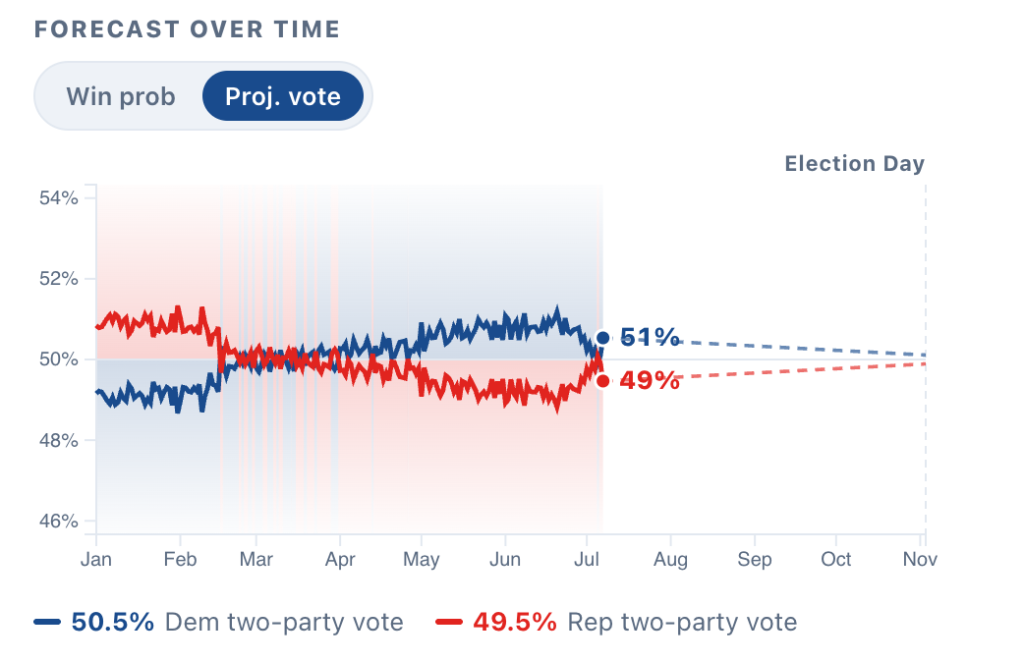
In the weeks before the latest allegation emerged, warning signs were already beginning to suggest that even if Platner’s previous controversies had faded, his path against incumbent Republican Senator Susan Collins was becoming increasingly difficult. His financial situation was becoming a serious problem, and he was showing early signs of slipping in the polls compared to where he stood just a few months earlier. While Platner’s campaign was effective at highlighting Collins’ vulnerabilities and branding him as an independent voice, he struggled to rebuild trust with moderate Democratic voters after months of controversies and attacks on the broader party. Previous controversies surrounding his Totenkopf tattoo, reckless Reddit posts, domestic abuse allegations, and sexting scandal were often dismissed by his supporters as politically motivated attacks, but their cumulative impact severely weakened him as a candidate. By framing these controversies as proof that Platner was a changed man who had overcome a troubled past, many ignored that this forced him into a defensive position where he had to constantly explain himself instead of focusing entirely on his message.
Incumbent Republican U.S. Senator Susan Collins is also an electoral titan with a long history of bringing money and resources back home to Maine, and while another Maine Democrat may now be able to address those concerns more effectively, Platner’s decision to brand himself as a firebrand limited his ability to make that argument. His repeated attacks on the Democratic establishment created a difficult dynamic because the same strategy that fueled his meteoric rise to becoming the nominee contributed to his downfall. His outsider message was effective at building grassroots enthusiasm and differentiating himself from traditional politicians, but when his campaign entered a prolonged period of crisis, he had spent months attacking the same party infrastructure candidates often rely on during difficult moments. While progressive attacks on corporate PACs and political establishments have proven successful for many candidates, Platner’s rhetoric went further by directly targeting Democratic donors themselves, creating tensions with parts of the coalition and fundraising network he would eventually need in a competitive general election. His attacks on the “Epstein class” reinforced his anti-establishment image among supporters, but that messaging became increasingly difficult to sustain once questions about his own character became the focus of the race. While some may argue these conclusions are hindsight, early warning signs were visible in publicly available data as Platner began losing ground even before the sexual assault allegation emerged.
We Shouldn’t Be Here

The reality is that Platner’s campaign never should have been allowed to reach this point in the first place. A candidate running for one of the most competitive Senate seats in the country needed a far more extensive vetting process than a rushed review, especially given the level of scrutiny that would inevitably come with a high-profile race. That responsibility also extends to Platner himself, who should have known that entering the most watched Senate campaign of the election cycle would bring unresolved issues from his past into the spotlight. At the same time, Democratic leadership, including Chuck Schumer and the DSCC, also deserves criticism for allowing the race to develop this way by focusing their recruitment efforts almost entirely on 78-year-old former governor Janet Mills rather than encouraging a more competitive Senate primary, especially when multiple prominent Democrats were willing to run for governor instead. Once those controversies began emerging, Platner’s campaign made the mistake of branding them as politically motivated attacks instead of seriously considering whether they were causing irreversible damage. There is a difference between politically motivated smears and actual scandals, and by refusing to consider stepping aside earlier, the campaign allowed the situation to spiral out of control until it ended up in this position.
What Now?

With that said, Democrats have reason to feel much better about their chances of winning the Senate race moving forward. Maine Democrats are on track to nominate either Nirav Shah or Troy Jackson, two strong candidates who already have established profiles and campaign infrastructure from their gubernatorial runs earlier this year that could allow the party to quickly move beyond the turmoil surrounding Platner’s campaign. Both candidates offer Democrats an opportunity to reset the race, refocus the campaign on Susan Collins’ record, and rebuild the coalition necessary to win statewide in Maine. While the race is still expected to be extremely competitive given Collins’ long-standing political strength and history of outperforming partisan expectations, she is likely facing one of the most difficult fights of her political career. Maine’s political environment has changed significantly since her previous victories, and Democrats now have a chance to make the race a referendum on Donald Trump, who has a 37% approval rating in the state. Regardless of who emerges as the nominee, Maine is positioned to remain one of the most important Senate contests in the country.
Conclusion
Ultimately, the collapse of Graham Platner’s campaign is a reminder that candidate quality, preparation, and judgment still matter. Political authenticity and anti-establishment messaging are powerful tools, but they cannot replace the fundamentals of campaigning: proper vetting, building a broad coalition, and ensuring a candidate can withstand the scrutiny of a competitive statewide race. Platner’s rise showed the power of a message that resonated with frustrated voters, but his downfall demonstrated the danger of ignoring vulnerabilities simply because a candidate is generating enthusiasm. As Democrats move forward in Maine and beyond, the lesson should not be that outsider candidates cannot succeed, but that any candidate seeking major office needs both a compelling message and the ability to survive the pressures that come with delivering it.
Discussion